
Home · AI coaching
Take part and decide when AI comes up in your organization
A workshop from ninety minutes to a full day, for you alone or for your leadership team. You try out AI on tasks from your own week, we look at what it can do in your organization, and at the end your next step is settled.
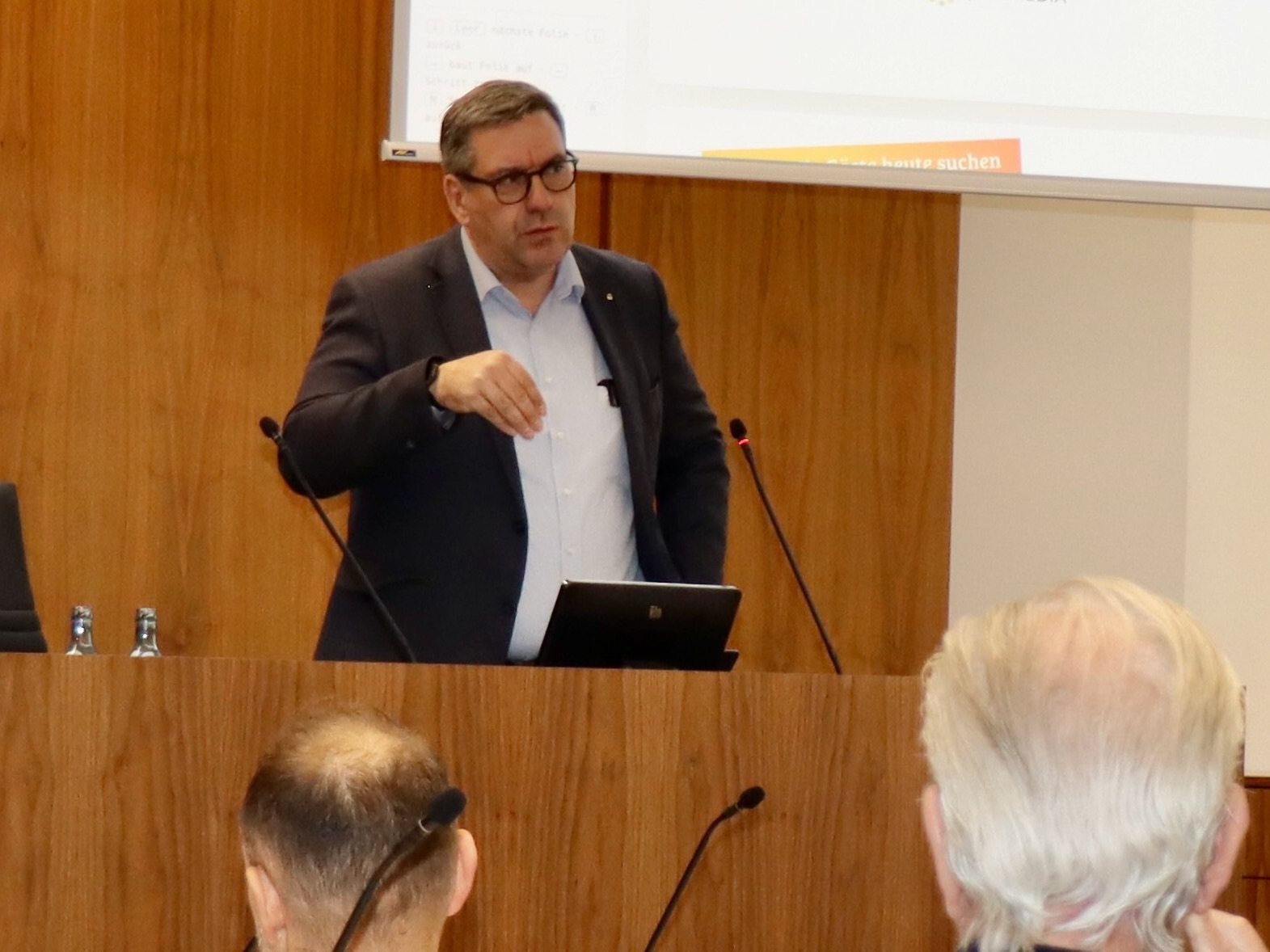
The board wants an AI strategy, a vendor presents its platform, the works council asks for rules. In each of these meetings, you are expected to hold a well-founded position. A few hours are enough for that, hours in which you work with AI yourself and ask every question on your mind.
Four areas we build your workshop from
We choose the areas to go deeper on in the first conversation. For half a day, I recommend two as the focus.
Your desk
Preparing for meetings, drafting speeches and briefing papers, research, and a counterpart for thinking things through. You work yourself and see where you save time and where you should double-check.
- Preparation and a second read
- Research with sources you verify
- Templates in your own voice
Your judgment
A language model calculates, word by word, the most likely continuation of a text. That is why its answers almost always sound convincing, including the wrong ones. Once you have seen this with an example of your own, you ask about the error rate and the origin of the data at every demo.
- How language models work and where they make mistakes
- Build it yourself, buy it ready-made or rent it as a service
- Costs and benefits, worked out on one of your own processes
- Questions to put to vendors and service providers
Your organization
The map of possibilities runs from texts and translations, answers drawn from your own documents and automated workflows between the programs you already use, to assistants for customers and staff. We lay it over your organization and look for the places where a start pays off.
- Strategy: speed up what exists, redesign processes or offer something new
- Human in the loop: fixed points in a workflow where a person checks and approves
- Data protection, the EU AI Act and liability, in outline
- Co-determination and rules for your staff
Since February 2, 2025, Article 4 of the EU AI Act has required organizations that deploy AI systems to ensure a sufficient level of AI literacy among their staff. For the legal review of a specific case, bring in your own experts.
Your role
Who in your organization decides on AI projects, who approves them and who answers for them. How you explain to your team what changes in their work, and how you handle objections. Plus your own work with AI, which your people take their cue from.
- Responsibilities and approvals
- Explaining AI in your organization
- Hearing and answering objections
Five steps from the first conversation to the follow-up
First conversation
Half an hour by phone or video call. You tell me what is coming up and what you want to know. Afterward you get a short questionnaire about your tasks and your working day.
Preparation
I build the exercises from your answers. If you want to work hands-on, I set up an account beforehand, so the session starts with the work and not with the settings.
Workshop
You work yourself, I demonstrate, and we talk about what you have seen. Every session includes a round in which we check an AI result together.
Compass
At the end we write down on one page your direction, the areas to go deeper on, the first task and the next appointment.
Follow-up
Two to three weeks later we spend an hour online on what you have tried, where things got stuck and what you will tackle next.
Exercises built on tasks from your own week
The task is real, the material is public and every person in it is fictional. That way you practice on your everyday work without entering confidential data.
A second read of your next speech
The AI reads your notes and points out the passages where your board is likely to ask first.
Rehearsing a difficult conversation
The AI plays a fictional counterpart. You practice leading the conversation, and the decision stays with you.
Sharpening a decision paper
AI helps you manage decision papers: it summarizes, outlines the options, names the open questions and keeps track of the deadline. In the workshop I walk you through the process using a made-up example.
Checking a dossier
The AI compiles information on a public institution. You verify one detail and see how reliable the result is.
A tool in a few minutes
I build a small analysis with fictional figures while you watch. Then we discuss who looks after a tool like that once your organization relies on it.
Ten questions for a vendor
You try two of them out on a fictional offer.
Three formats, from a one-to-one session to a day with your leadership team
One-to-one coaching
For you alone, ninety minutes to three hours, in person or online. Afterward, online sessions as needed and the follow-up.
Half a day with your leadership team
About four hours with up to five people. Two areas as the focus, exercises in small groups, a shared compass.
A full day with your leadership team
All four areas plus a strategy part: we lay the map over your organization and sort the ideas by effort and benefit. Facilitated with my workshop program Werkraum, minutes the same evening.
For all formats: anywhere in Germany, plus mileage and expenses, no VAT, no obligation to book follow-up work.
Next, your own processes: If you then want to go through your processes one by one, the AI readiness assessment is the next step.
AI readiness assessmentFour documents to take with you
The compass
One page with your direction, the first task and the next appointment.
The question card
Ten questions for meetings with vendors and service providers, for example about the error rate and about who will maintain the tool in two years.
Your templates
Instructions for the AI in your own voice, saved in your account.
The minutes
For the leadership team formats, the same evening, with all ideas and tasks.
Confidential and at your pace
In one-to-one coaching, you set the topics and the pace. I treat what we discuss as confidential. Only what you want to take with you is written down, and no recording device runs during conversations about people and responsibilities. We only enter public material into the AI until it is settled what your organization allows.
A coach who has run a company
For thirty years in television, I explained difficult topics to people who have to understand them the first time they hear them. As managing director of a regional TV station, I sat on the side that decides and signs. In 2026 I completed three full-time AI training programs. The Workbench shows 24 tools I have since built for my own brands, a volunteer role and clients.
Half an hour, and you know which format suits you. The first conversation is free, by video call or phone.
Book a first conversation