
Home · Content and media
Posts, films and shows, from the first topic to publication
I advise you on editorial work and content, produce films and Business TV in my own studio and connect AI tools to the software you already work with.
Six steps from the topic to the published post
Most organizations have plenty of topics. The trouble lies in the questions behind them: Who collects the topics, who writes, who approves, what appears where and when? We define this division of labor together, and there is a tool for every step.
Find topics
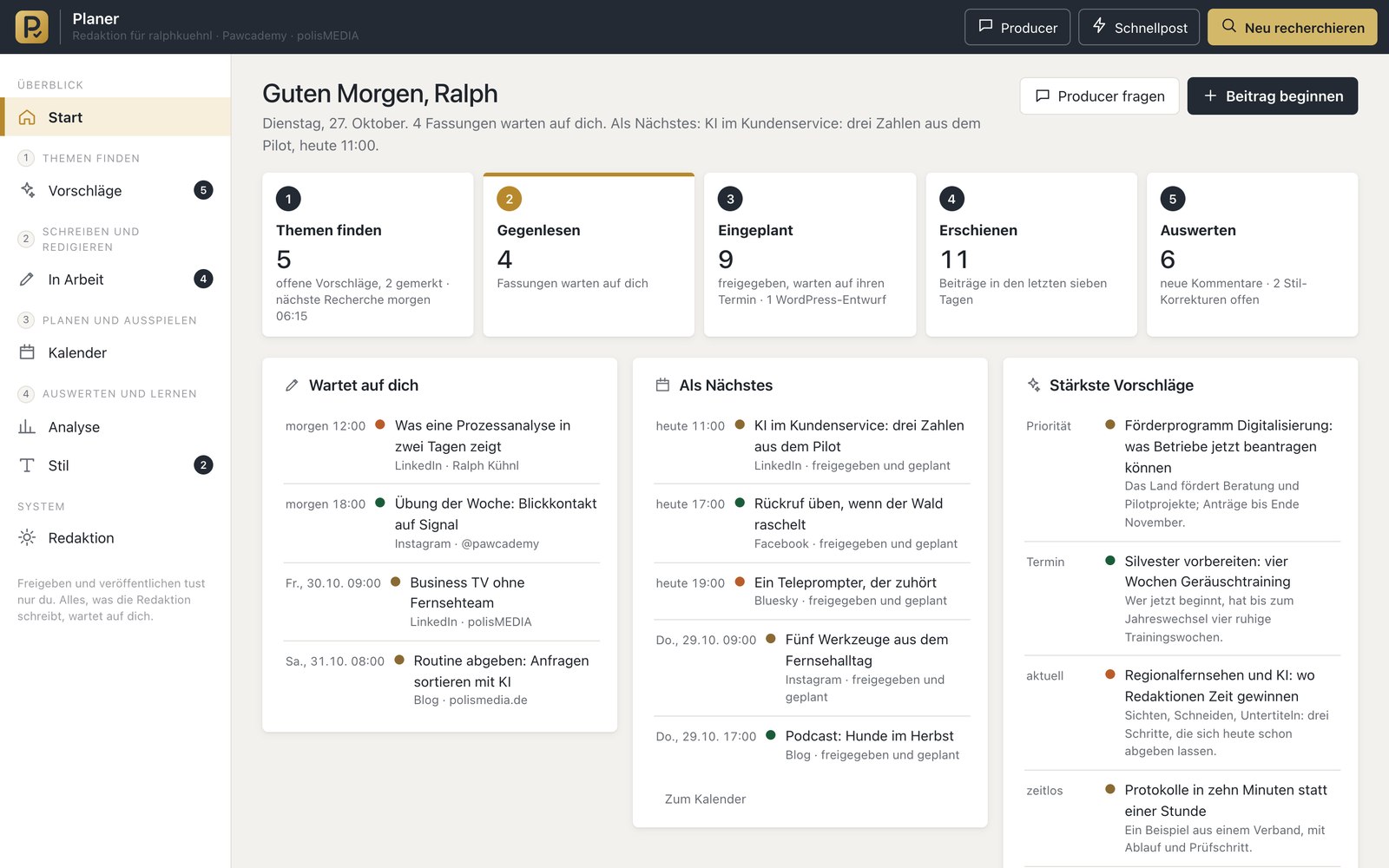
A program searches regional and specialist news sources and gives each item a score: How well does it fit your organization? The matching items go into the editorial plan as suggestions, with occasion, key message and source. You accept a suggestion, save it for later or reject it.
Plan
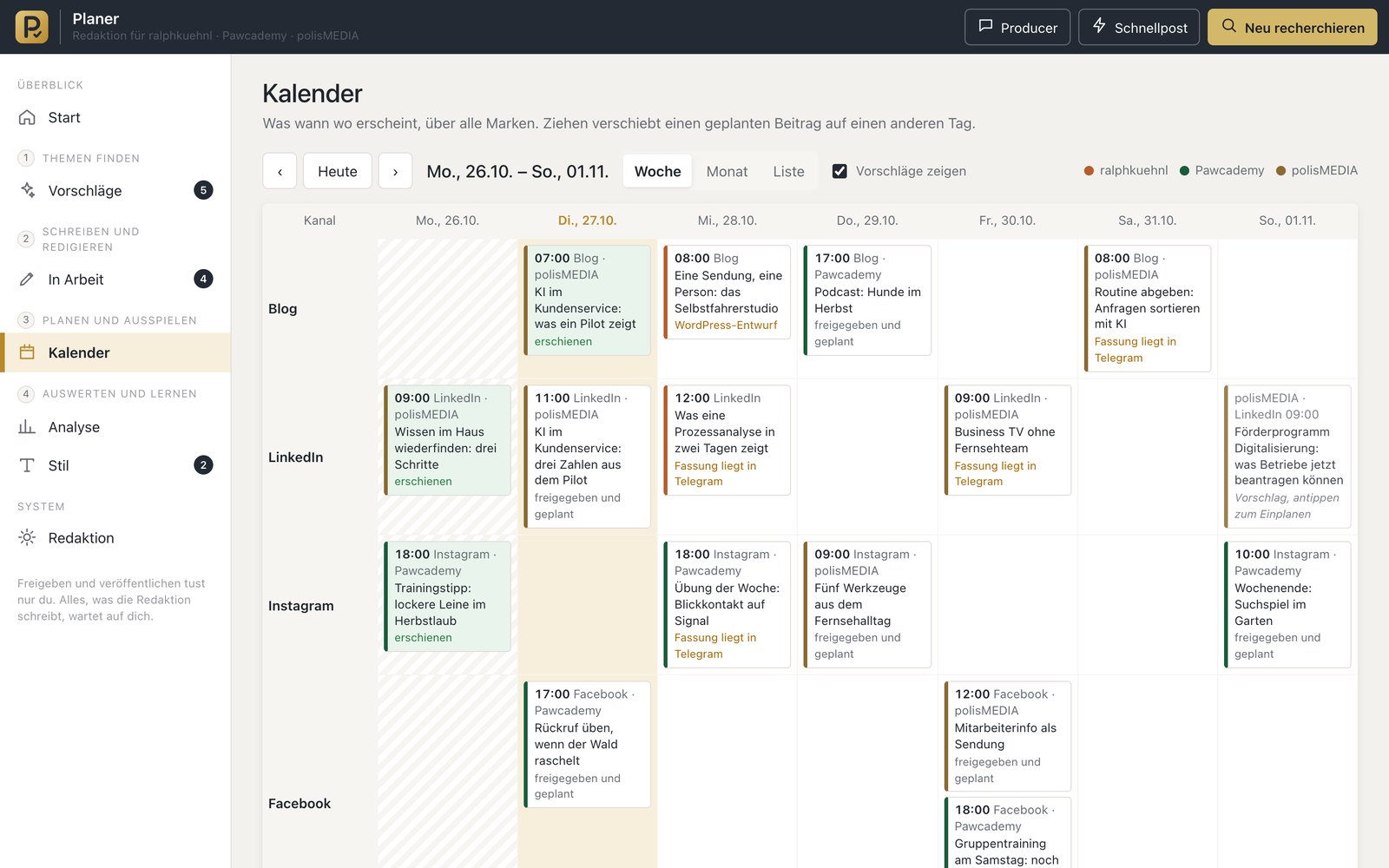
In the editorial plan, you see all brands and channels for a week. You move dates with the mouse. For each platform, you choose the right format: post, carousel of several images to swipe through, short video or live blog.
Produce
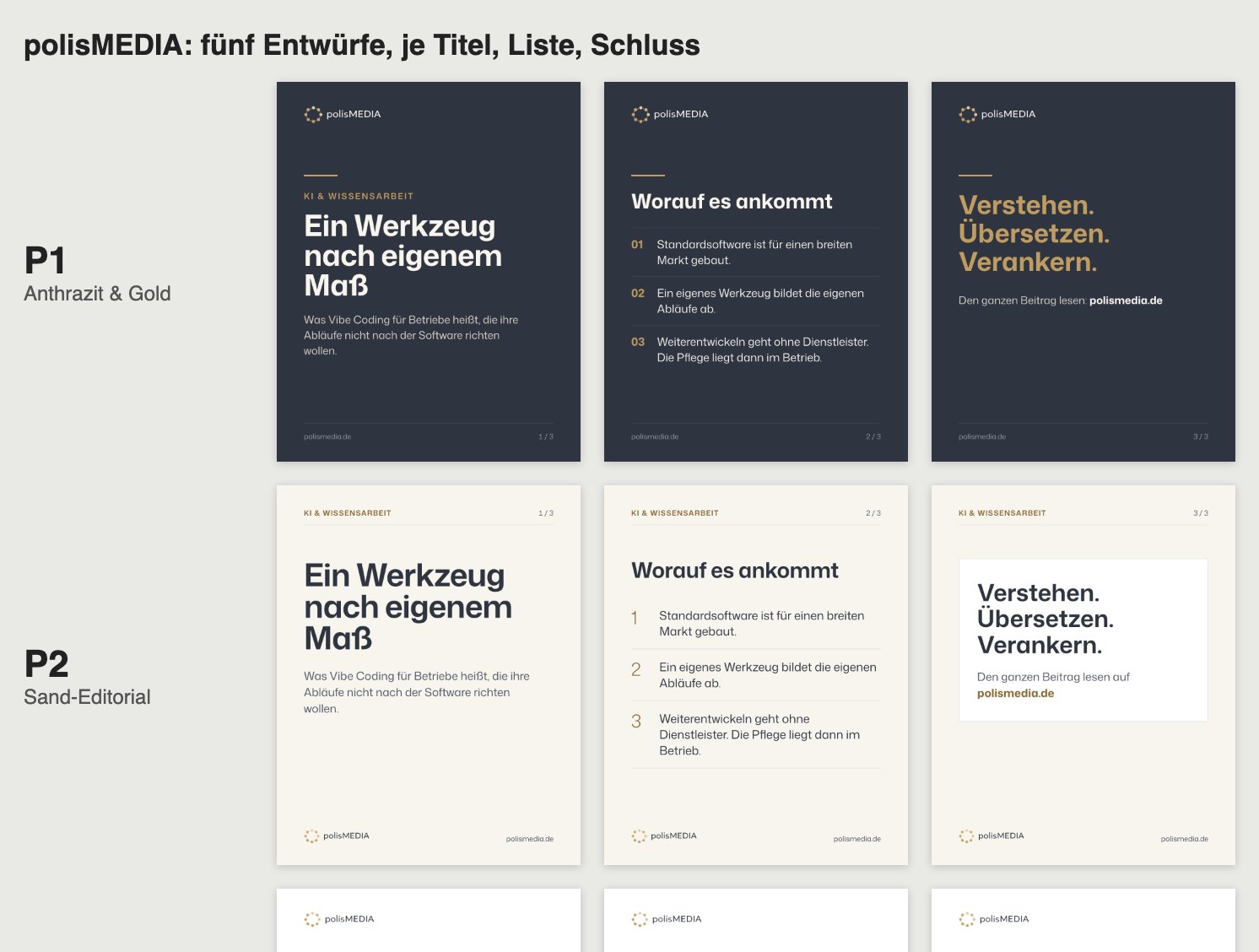
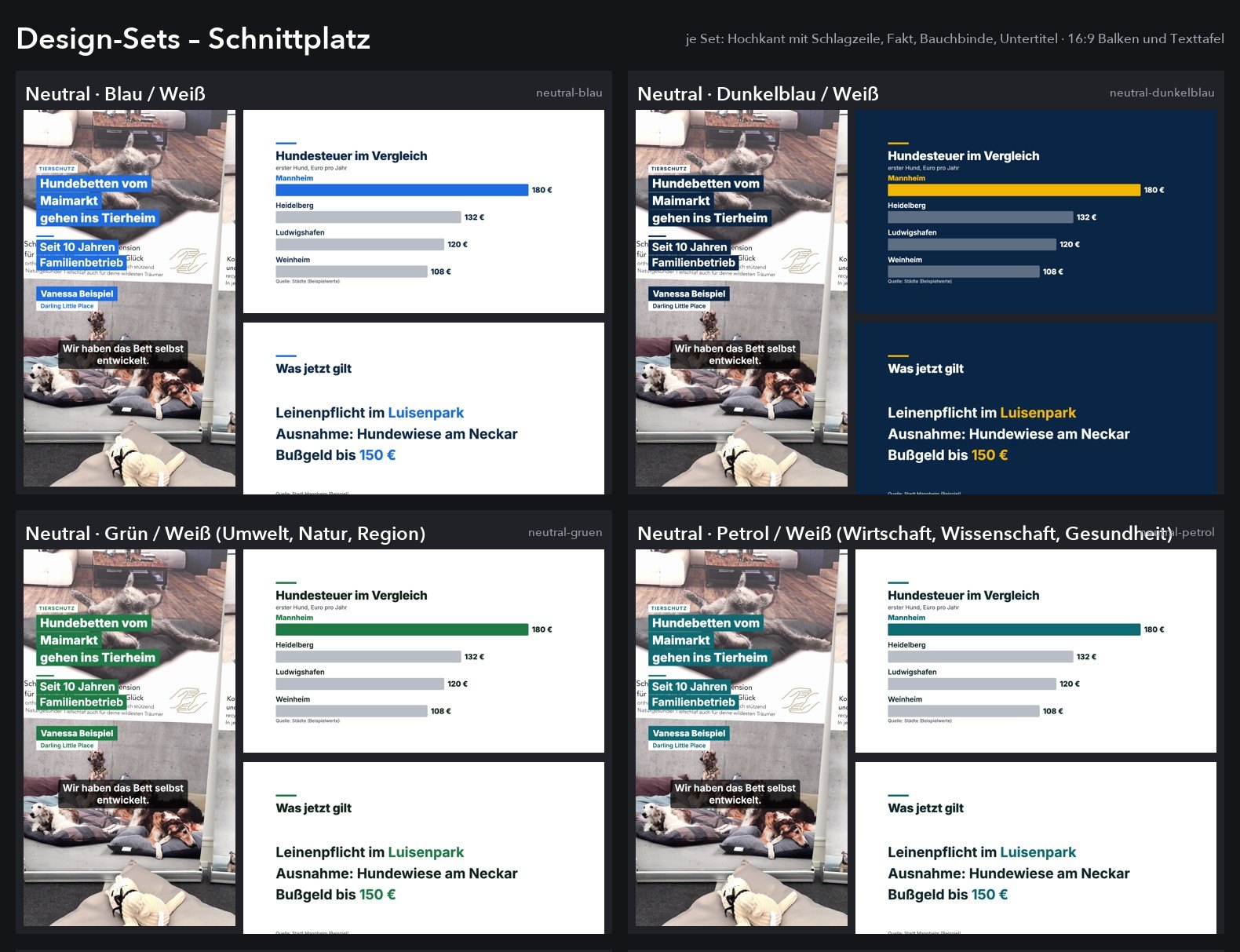
The AI writes texts in your organization’s style, and slides and graphics get your brand’s colors and fonts. The AI editing suite edits films through to the broadcast version, and shows are made in the self-op studio. On the go, you send voice messages and phone videos through the Wilma phone app.
Approve
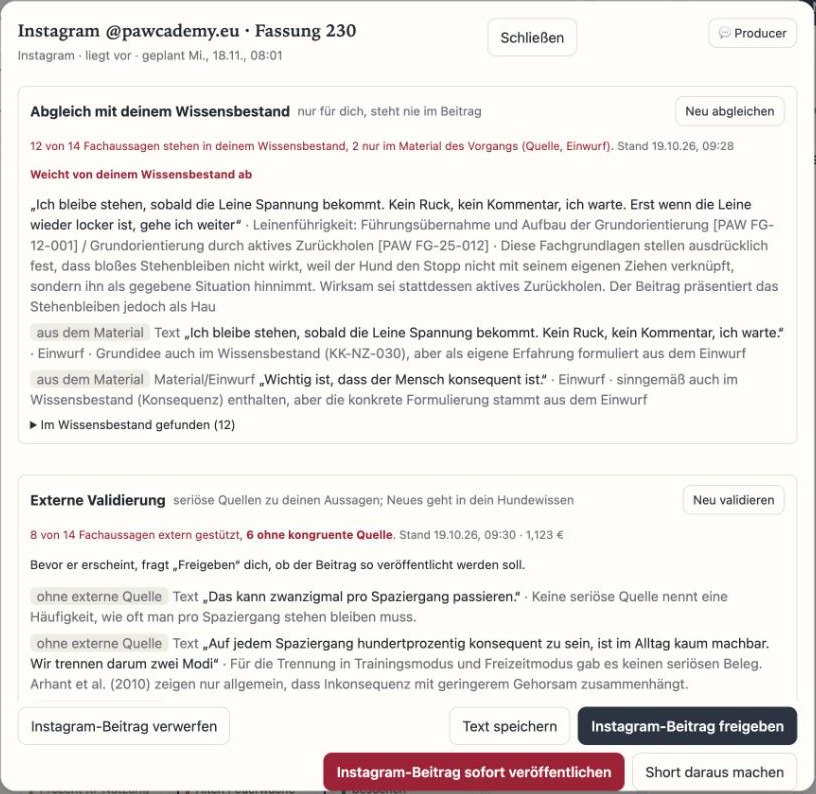
Nothing appears before you have approved it. Beforehand, the AI checks every expert statement against your organization’s documents and marks anything it finds no evidence for. With films, the person approving puts each comment at the exact second it refers to.
Publish
An approved post appears on the website, in social networks, in the newsletter, as a live blog or as a live show on your own site. I connect your content system for this.
Evaluate
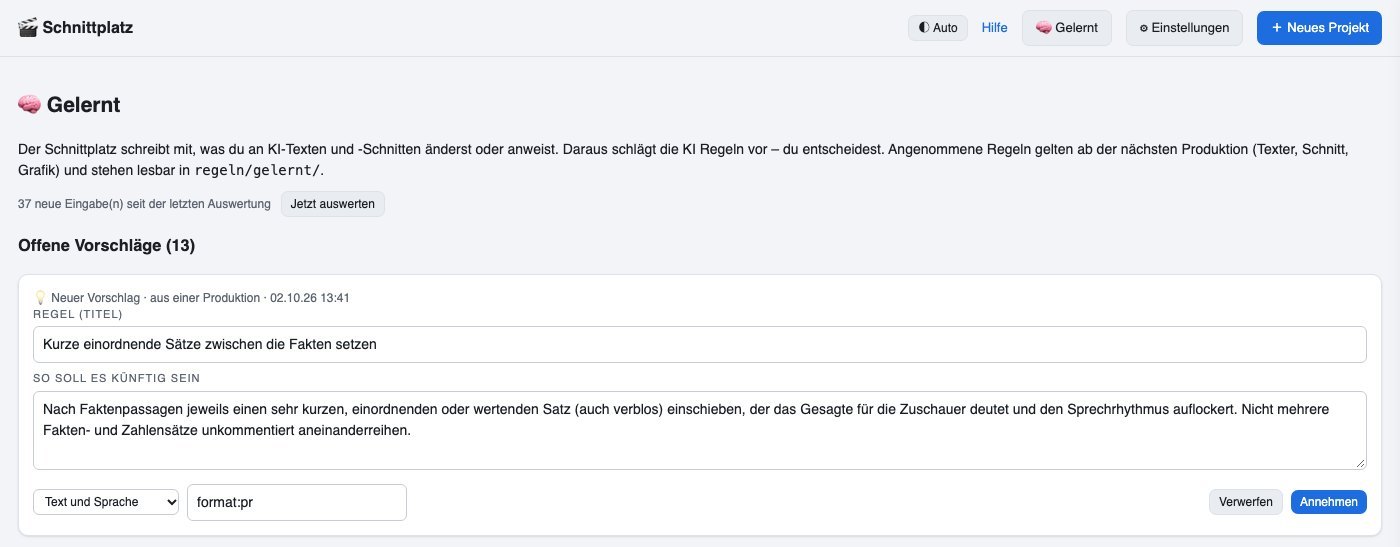
You see reach and comments from all channels in one place. When you correct a text, the system turns it into a rule suggestion. If you accept it, the AI writes the next texts according to that rule.
I’ll demonstrate all six steps for you: in your brand’s design, with the topics of a sample company.
Request a demoYour own TV for your organization, with one person running the technology
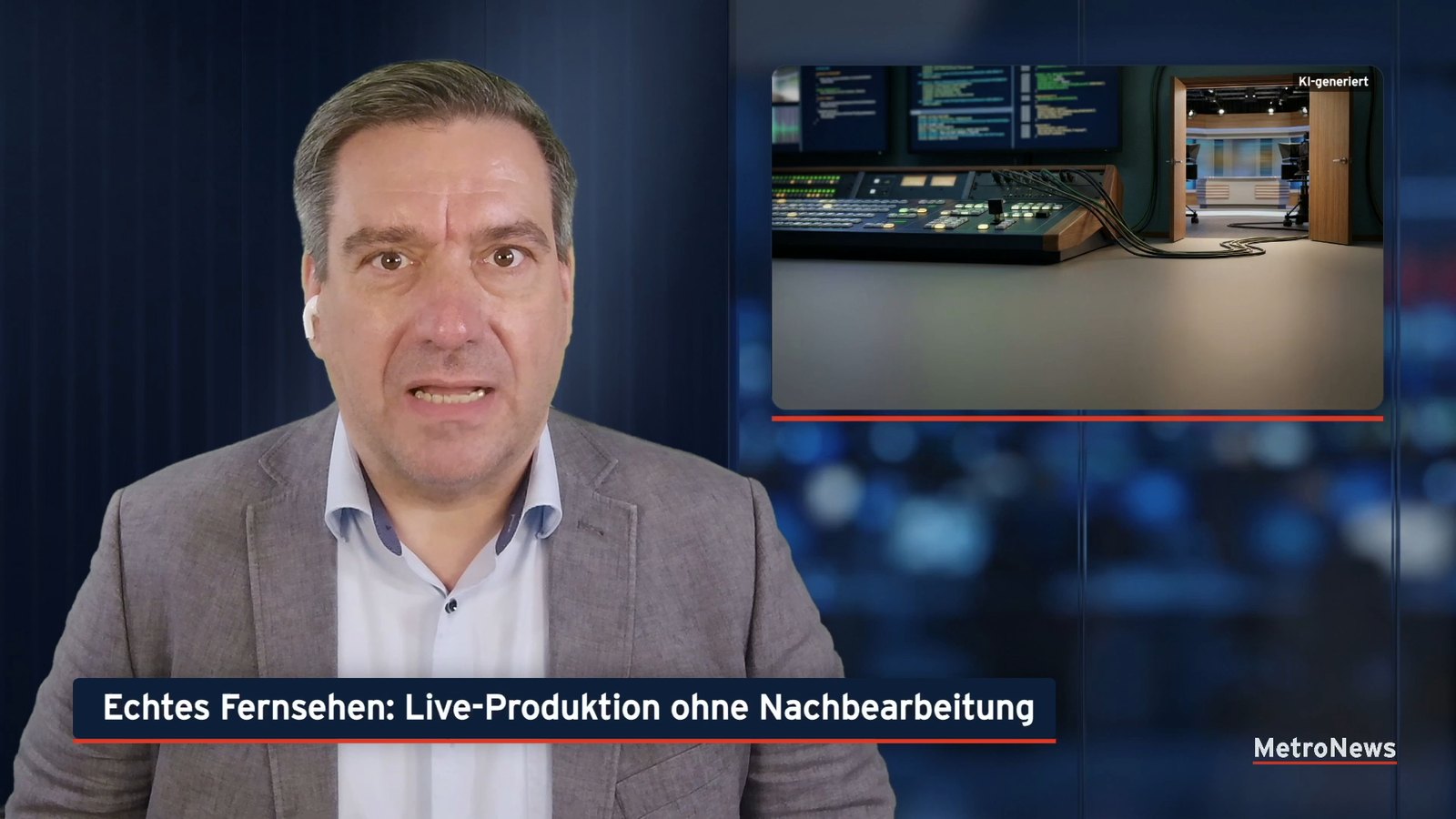
Business TV means shows a company or association produces itself: for its staff, as a customer magazine or for its members. In the self-op studio, one person hosts the show, and their voice switches to the next item. A small team produces shows there regularly, live or recorded.
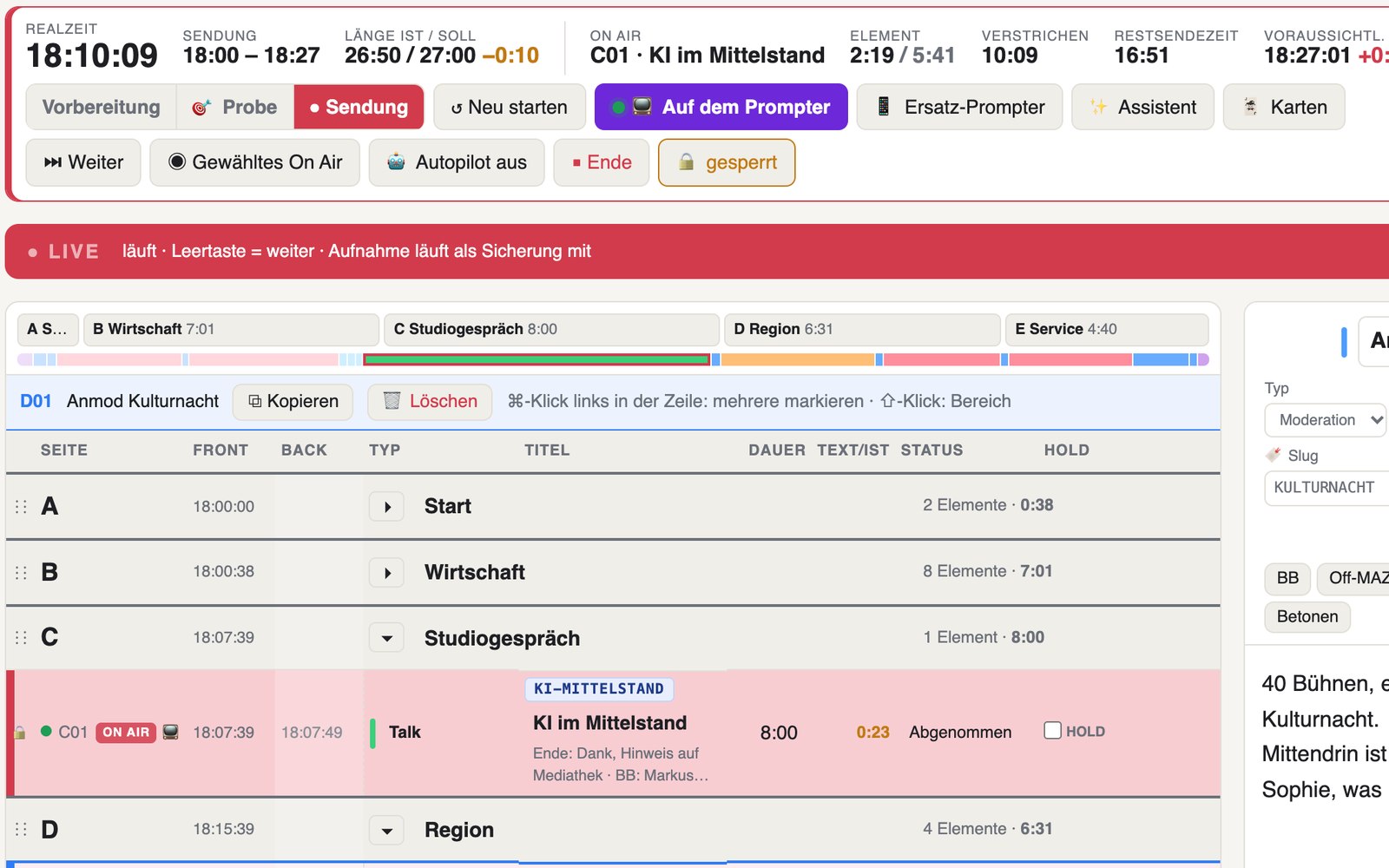
- Your whole team can edit the rundown, the order of all segments with their timings, in the browser at the same time. The show clock shows the remaining time.
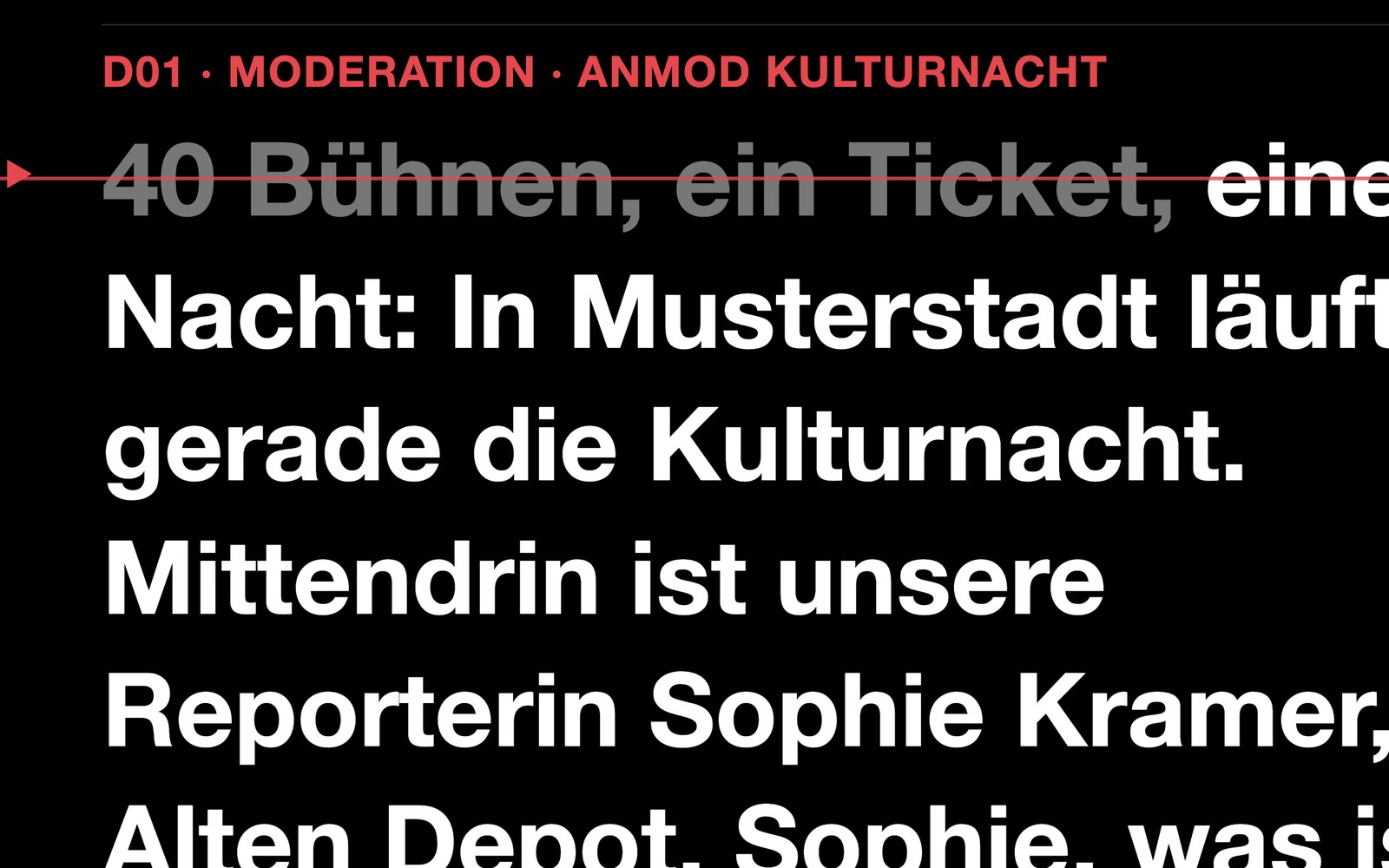
- The teleprompter scrolls at the pace of the voice. When a host segment is finished, the next clip starts automatically. Lower thirds, the names shown on screen, appear at the point in the script where they were entered.
- Guests join via a link. The picture switches automatically to whoever is speaking.
- The show streams live on your own website, without cookies and without a third-party platform.
- Before the show, the show assistant suggests which segments to drop first if time runs short. If the show runs over, one keystroke removes the next segment on that list.
Employee news as a show
The newsroom collects topics and writes drafts, and the show is recorded in the studio with a teleprompter. It appears on the intranet or live on the screen in the cafeteria.
Customer magazine and web series
Regular episodes with fixed segments and guests who join via a link. The same material yields short versions for social networks.
Talks and hybrid formats
Panels and events with an audience in the room and live online at the same time. I provide hosting and technology.
Films that the AI editing suite cuts to the broadcast version, approved by you on screen
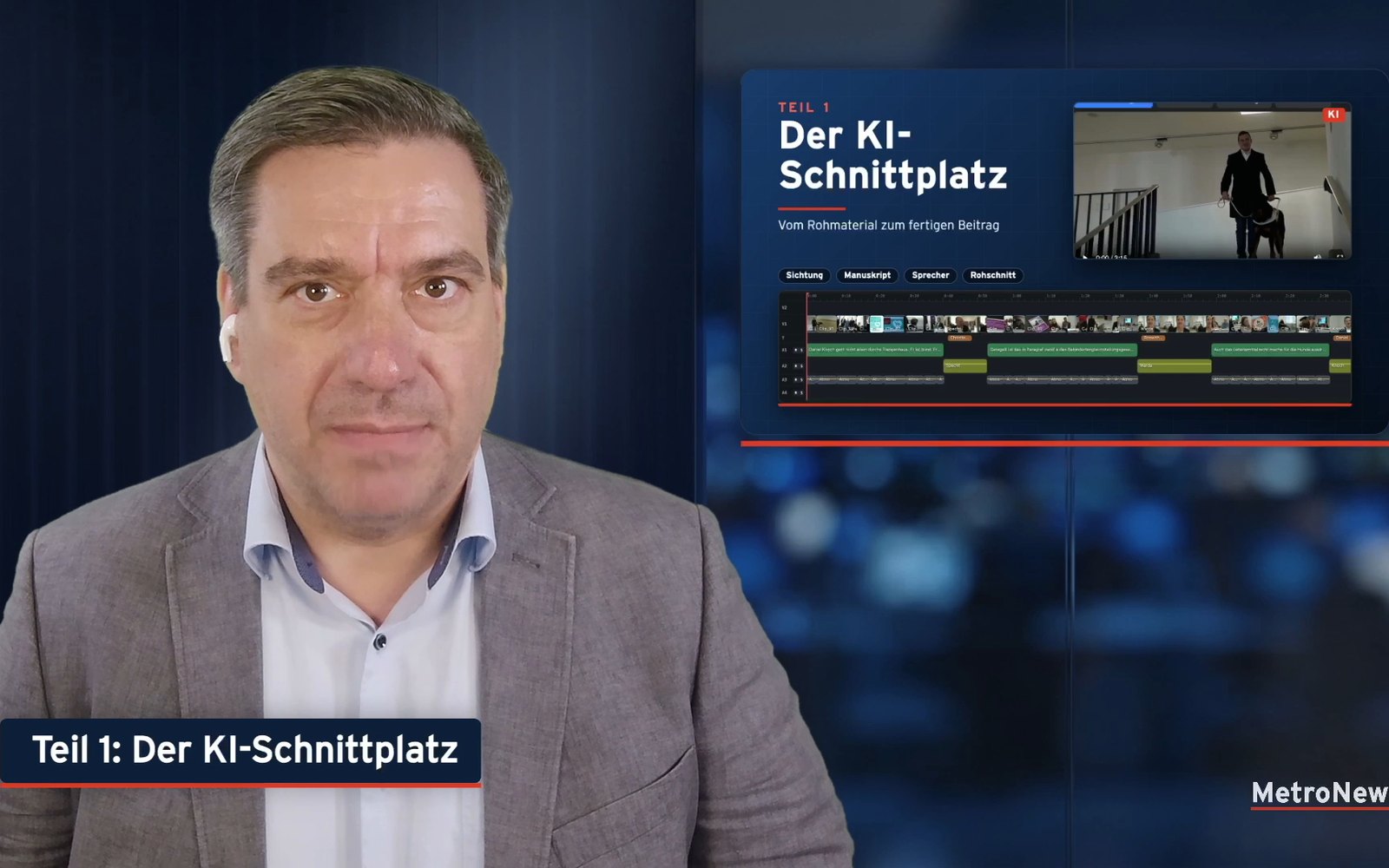
I do the concept, shoot, hosting and editing myself. The AI editing suite transcribes what is said in the raw footage and edits the piece through to the broadcast version. You decide on every shot.
Report, corporate film, interview series
Research, shoot and editing to the standards of television journalism, for foundations, associations, ministries, research and companies.
- Web series and reports
- Studio talks and interview series
- Explainer films on difficult topics
AI editing suite
One hour of raw footage becomes a piece ready for broadcast. The AI transcribes everything that is said, puts the strongest interview statements first and edits the finished piece. You let it run on autopilot or step in after each step. Fine-cutting by hand is possible but not necessary: in the built-in editor, which learns from your changes, or in Final Cut Pro and other common editing programs.
- Transcript with timestamps
- Script in your organization’s style, with the source in the footage for every sentence
- Subtitles and a vertical version for phones from the same project
- AI voice for quick preliminary versions, labeled as such
Approval right in the film
You watch the film in the browser and place your comment at the point in the film it refers to. During editing, it sits at the right second.
Podcasts with a blog post and social media copy for every episode
Format, recording, editing and publishing. The AI writes the texts for each episode and checks the expert statements against your organization’s knowledge.
Format and recording
We define segments, guests, length and release schedule. Recording takes place in the studio or by video call.
Blog post for each episode
For every episode, a post with the key statements and context with sources, as for the episodes of the PAWCADEMY dog school.
For social networks
Quotes, short videos and carousels, with a separate text for each platform.
Media training, sparring and hosting
For people who stand in front of a camera, speak in committees or go on stage.
Media training
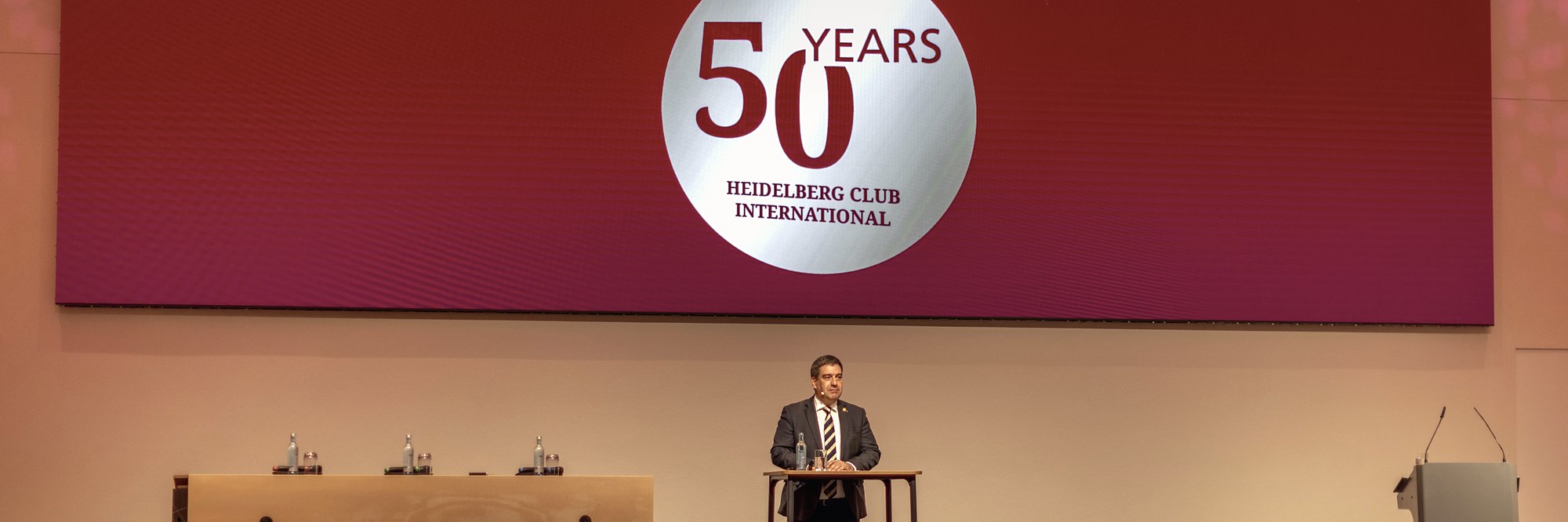
On-camera interview training, presentation coaching and crisis simulation: an emergency played through with camera and questions.
CEO sparring
We work on message and presence when the situation is sensitive or a decision with an open outcome is coming up. Confidential, and with pushback where it’s needed.
Hosting
Panels, public dialogues, conferences, talks and web formats, in German and in English.
Connected to the systems you already have
I connect new tools to what you already use: website, content system, social networks, studio and calendar. Nobody has to copy texts from one program to the next anymore.
- Website: Posts arrive as drafts in your content management system, the software behind your website, for example WordPress. Image, category and excerpt are already set.
- An association’s content system: One click fills in every field of the input form and uploads the images. You click Save yourself.
- Social networks: LinkedIn, Instagram, Facebook, Mastodon and Bluesky, each channel with its own text and its own date.
- Studio: Host scripts go straight to the teleprompter, shows go live on the website.
- Live blog: You type updates into your phone, and they appear right away as an ongoing report on your site.
- Calendar and video call: When someone books an appointment, the video room is created automatically, and the link is in the confirmation. After the meeting, the AI writes the minutes.
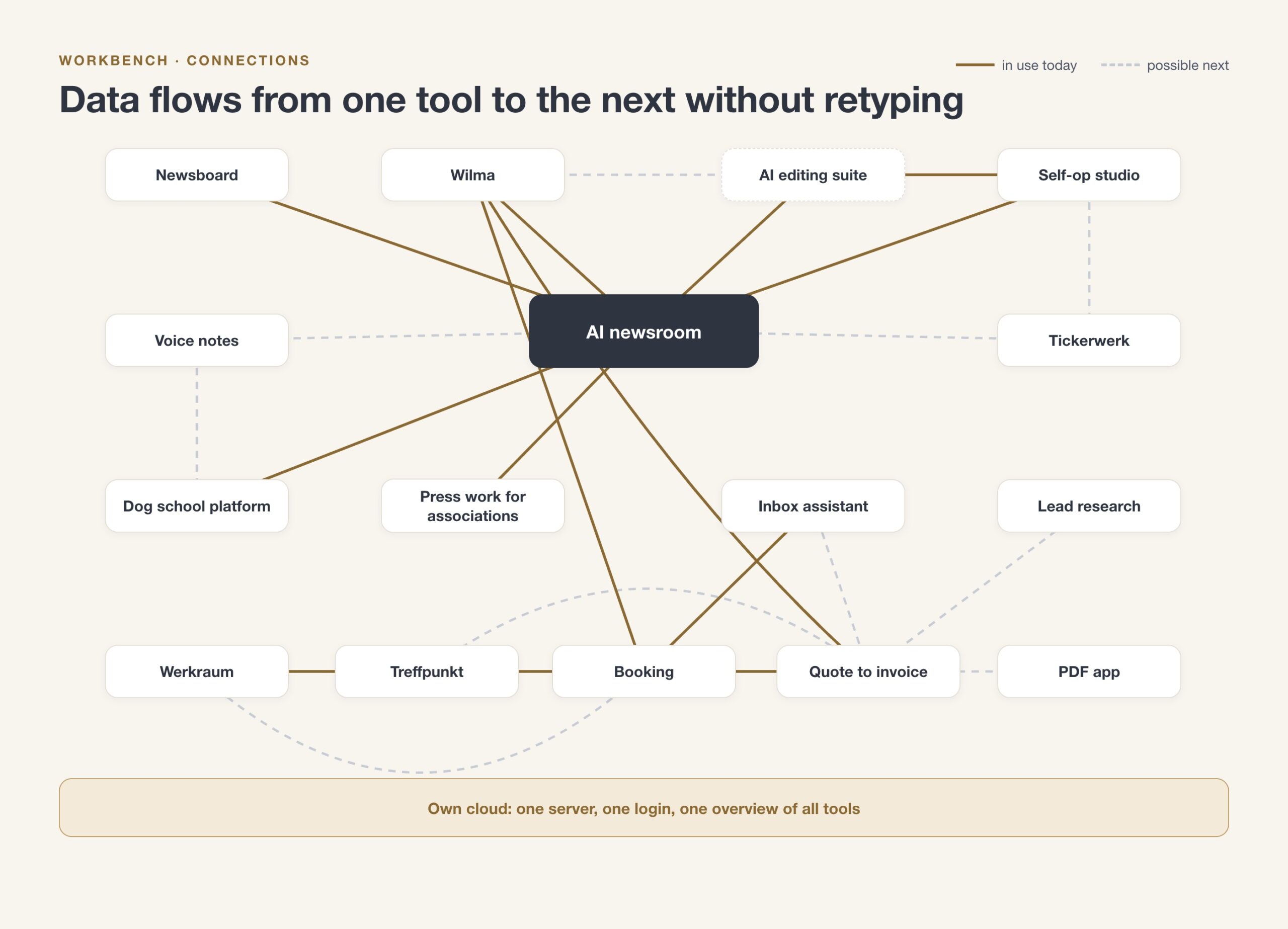
We’ll see which connections are worth it for you once we look at the software your team uses today.
Discuss systemsCommunication during change, in crises and for positioning
People who don’t understand why something is changing keep working the old way. I help you explain change and difficult situations so that they get through to people.
Explaining change
So that staff understand and take part: one key message, managers who pass it on to their teams, and formats in which employees ask questions and get answers.
- Key message and narrative
- Internal communication and managers
- Dialogue formats, also as a show
Positioning and press work
We define what your organization stands for, phrase the key messages and plan the channels through which you reach the people who matter to you: internally and externally.
- Positioning and key messages
- Press work and contacts with newsrooms
- Visible in AI answers, with GEO (Generative Engine Optimization)
Prepared for a crisis
Before things get serious, we define which crises are conceivable, what your organization will say and who does what. On camera, you practice the questions that will come in an emergency.
- Crisis simulation with camera
- Agreed wording and procedures
- Questions from past coverage, compiled by the AI
Difficult dialogues
Some conversations are deadlocked before they begin. I facilitate dialogues between companies, politics, civil society and the public, discreetly and with a goal agreed in advance.
After three decades on both sides of the microphone, I know fairly reliably which question comes next. And which answer you will find in the newspaper the next morning.
Ralph KühnlProduced for companies, ministries and associations
Thirty years at Rhein-Neckar Fernsehen, mostly as project lead for corporate productions, thirteen of them for the corporate communications department of BASF SE.
Tell me what you’re planning.
Discuss a project